
Charlie Lawrence 6th Place at Comrades: Fastest American Ever on the Course

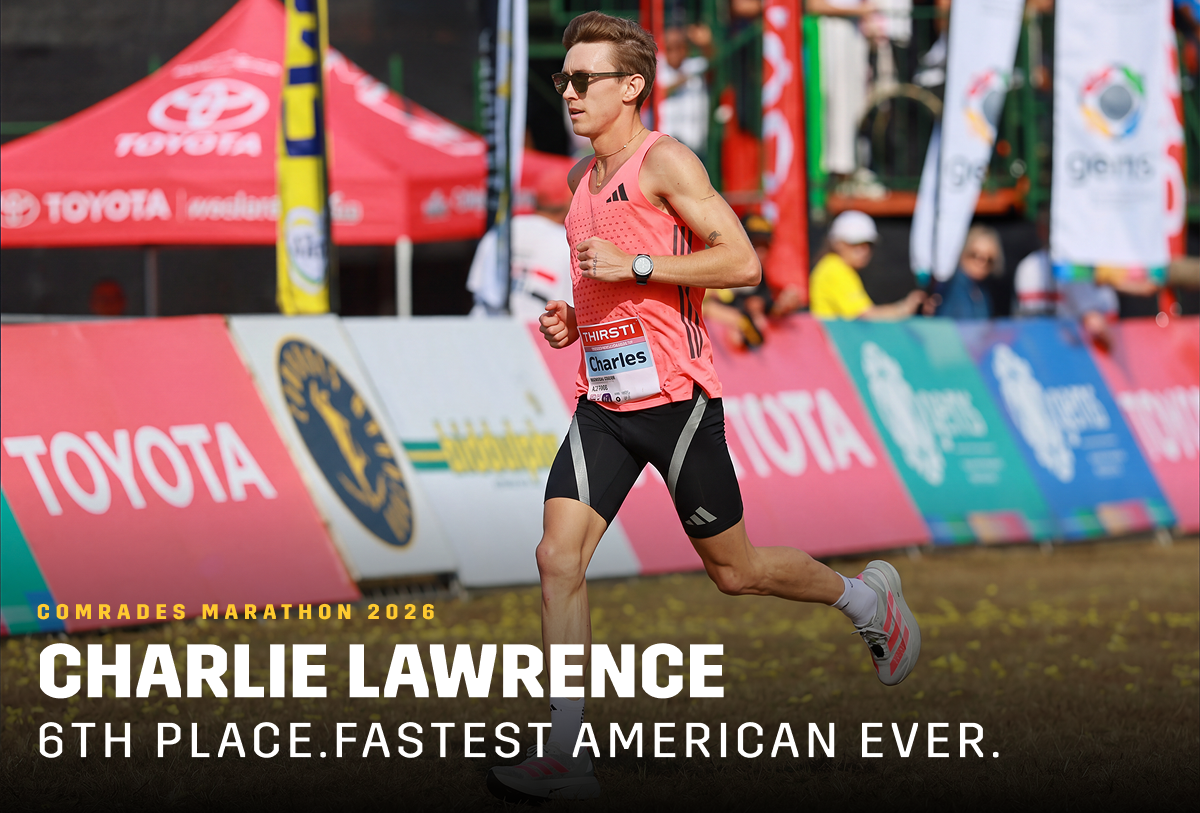
Charlie Lawrence made history at Comrades Marathon, finishing 6th overall as the fastest American ever on the course and the second-fastest debut in the race's history.
Comrades is not a race you master on your first attempt. Nearly 50 miles of relentless climbing and descending create a course that exposes any weakness in your pacing strategy or movement mechanics. Charlie’s Stryd data tells the full story — not of an athlete simply surviving the course, but of one who encountered adversity and worked through it.
Let's dive into the data and uncover what made this performance historic.
The Power Story: Strong Start, Hard-Fought Finish
Charlie ran a gutsy race, backed by data that shows just how prepared he was — and how much he had to fight for this result in the back half.
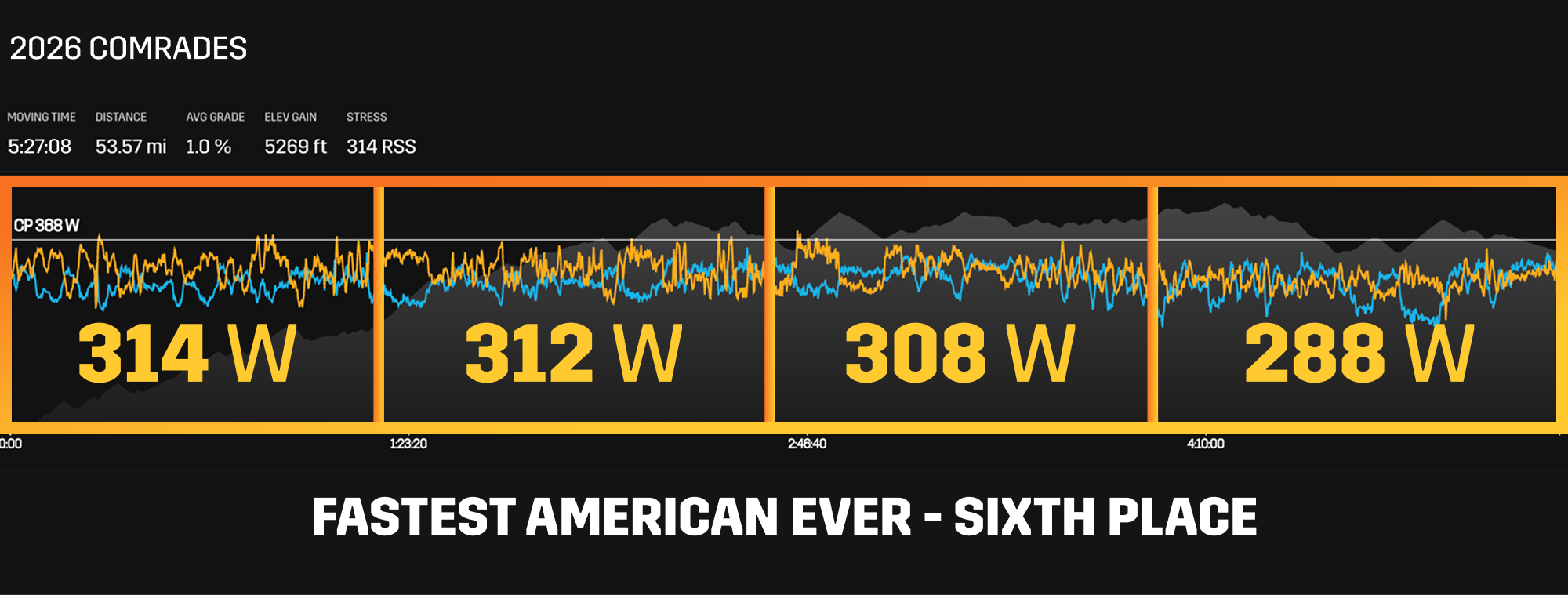
Here is the data breakdown:
- Q1: 314W (+3% above average)
- Q2: 312W (+2% above average)
- Q3: 308W (near average)
- Q4: 288W (5% below average)
The climbing was front-loaded on this course, and Charlie leaned into it early, running 2-3% above average power through the first half. Around the midpoint, his Achilles began to tighten and fatigue started to set in. The dip in power over the final two quarters reflects that reality, but Charlie pushed through the discomfort, closed strong, and continued moving up through the field.
That's what makes the result stand out. Comrades doesn't care how clean your race plan looks on paper; it rewards whoever can keep solving problems mile after mile. Charlie faced a real obstacle the second half and responded anyway.
Mechanics That Didn't Break Down
The power story becomes even more impressive when you look at Charlie’s mechanics.
Across nearly 50 miles of changing terrain, Charlie's Stryd Duo metrics — Leg Spring Stiffness balance and Vertical Ratio balance — stayed within approximately 1% of their average values. Climbs, descents, late-race fatigue barely moved the needle. That level of consistency doesn’t happen by accident. It points to exceptional durability and fatigue resistance built over months of training.
Charlie has been managing a left Achilles issue throughout his build. Minor asymmetries showed up in the data — slightly longer ground contact on the left and modestly lower left leg spring stiffness — but none fell outside his normal range.
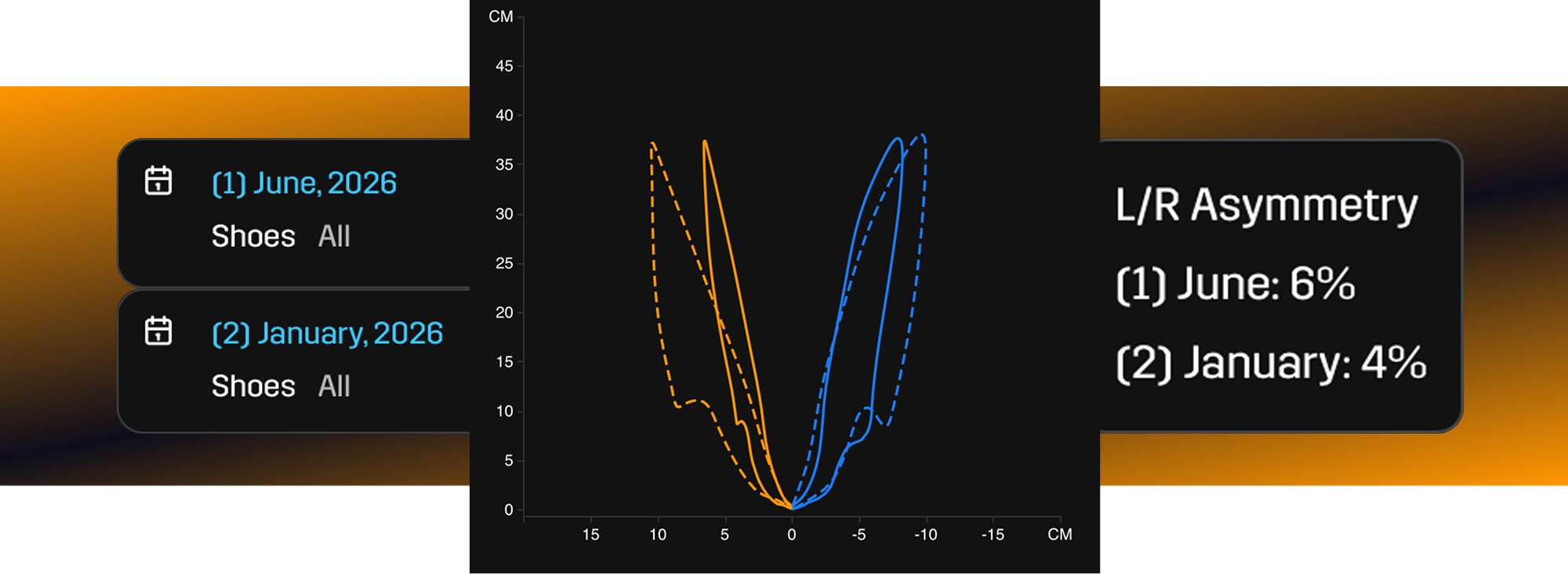
A footpath comparison between January and June shows a subtle shift, but not a dramatic one. Viewed alongside the asymmetry metrics, it reflects minor redistribution of loading patterns consistent with ongoing Achilles management — not a developing limitation.
Critically, the uphill terrain didn’t amplify those asymmetries. The compensation pattern Charlie developed remained remarkably stable from mile one to mile fifty.
Late-Race Adaptation: Smart, Not Desperate
One of the more telling insights came during the second half of the race. As fatigue accumulated on the downhills, Charlie increased his cadence while both Impact Loading Rate and Form Power decreased. More turnover, less load per step.
This is fatigue management at its best — a mechanical adjustment that allowed him to keep moving efficiently while reducing the demands on legs that had already absorbed a tremendous amount of stress. Rather than signaling a breakdown, it reflects a well-trained athlete making real-time adjustments to stay in control.
The data doesn't describe someone fighting to hold his form. It describes someone who crossed the finish line looking mechanically similar to how he left the start.
Up Next: 100K World Champs
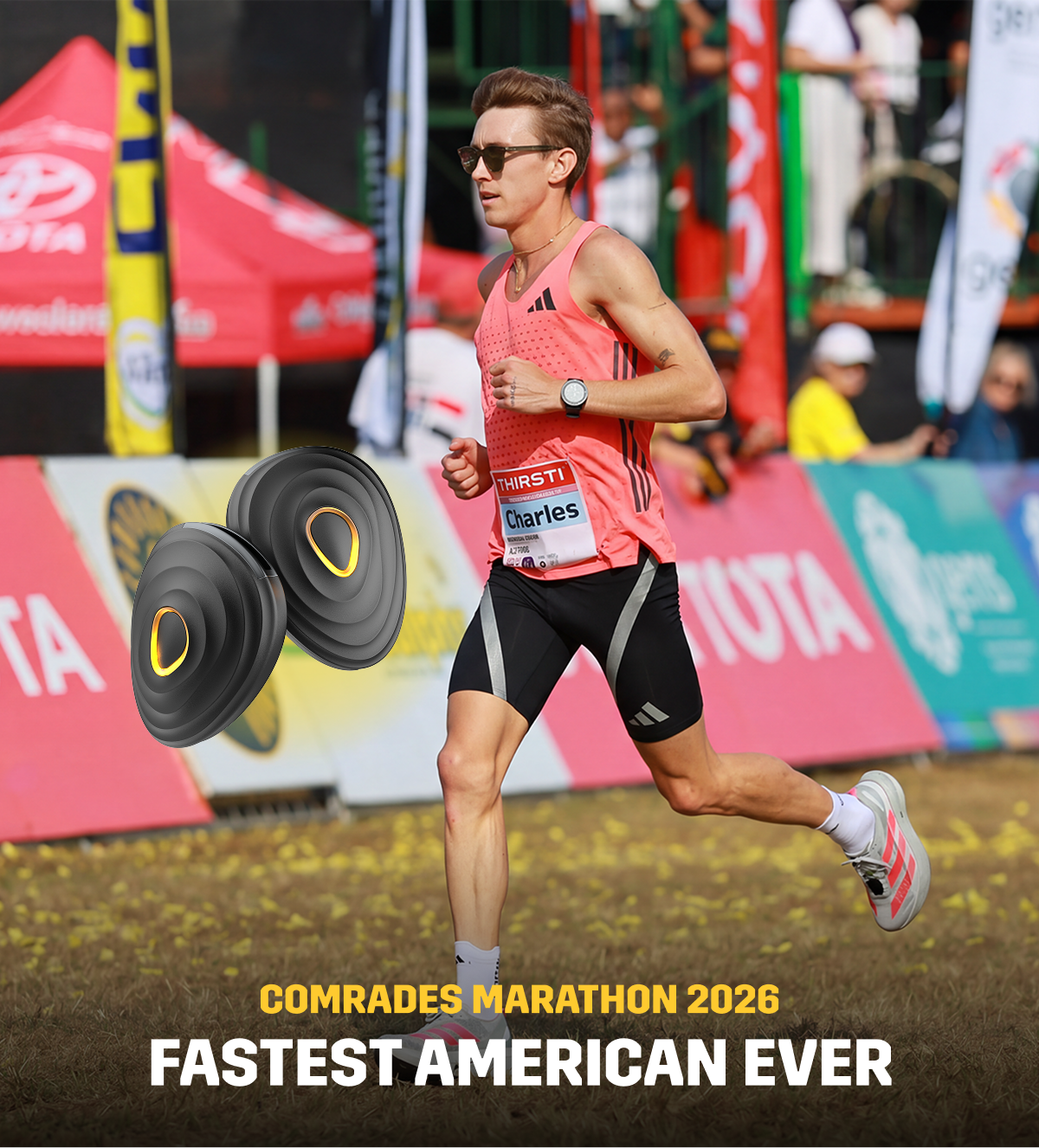
Fastest American ever on the course. Second-fastest debut in a race that's been running since 1921.
Charlie delivered a tactically mature performance, backed by data that shows just how prepared he was — and how well he executed under the demands of one of ultrarunning's most iconic courses.
He now has both the blueprint and the data to refine it. Next up: 100K World Champs in 98 days.