
Dakotah Popehn Wins Grandma's Marathon for the Third Time, Delivering a Masterclass in Marathon Racing

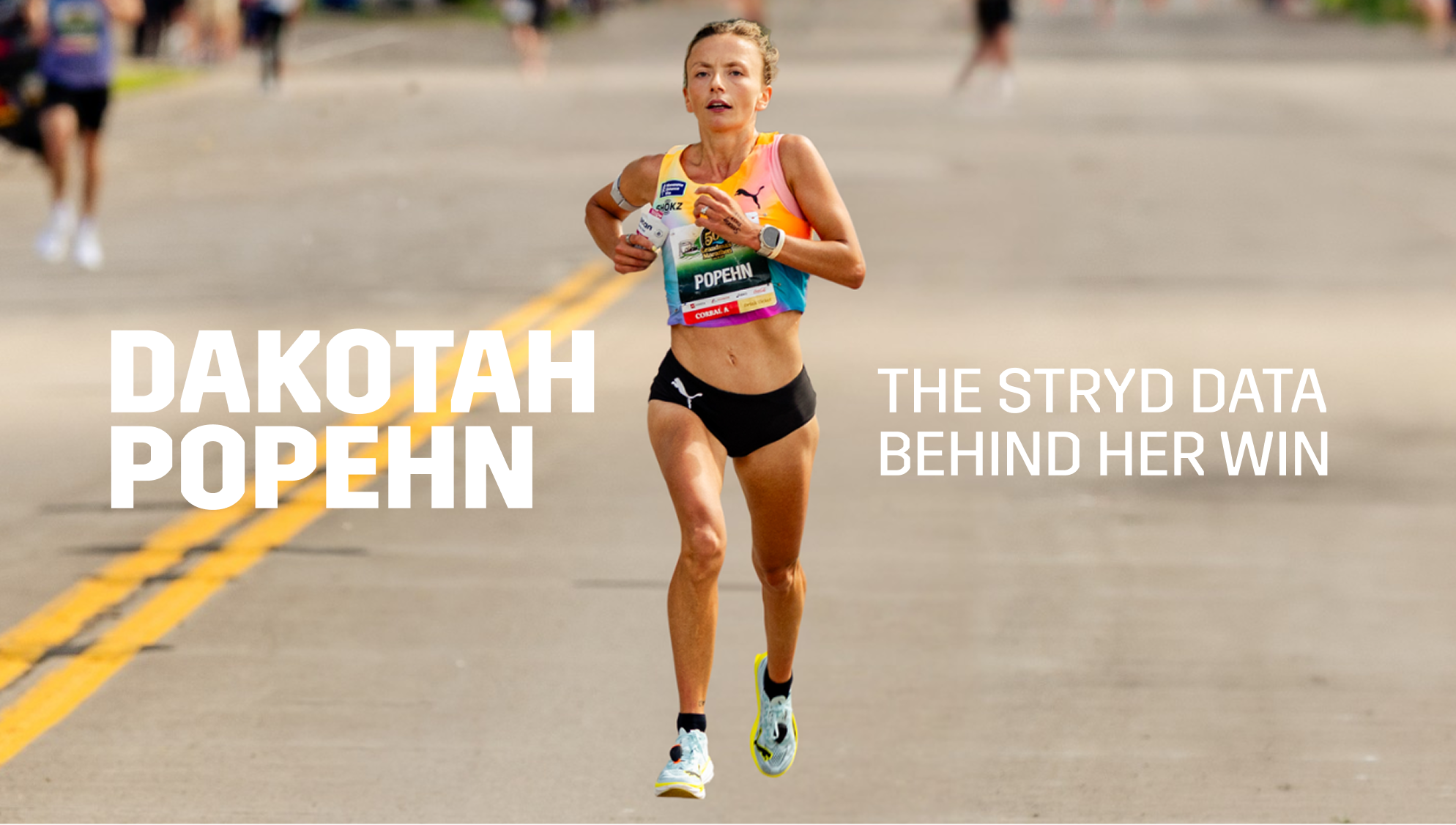
Grandma's Marathon is one of America's most beloved road races, a point-to-point course along the shores of Lake Superior. Fast, scenic, and unforgiving late, the course's notorious Lemon Drop Hill arrives at mile 22, just as the fatigue is setting in. This year, Olympian Dakotah Popehn made it one to remember.
Now a three-time champion, having previously won in 2021 and 2022, Dakotah broke the tape in 2:28:51— two months after running 2:24:04 at Boston. This was not a race won on talent alone. It was won on discipline, patience, and mechanics that held together for all 26.2 miles.
Let's take a look at what the data reveals.
A Textbook Pacing Arc
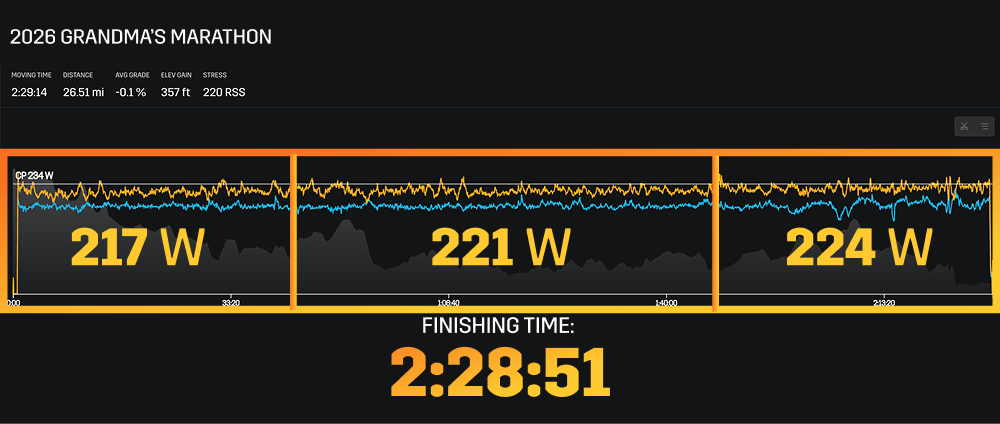
Dakotah executed a disciplined marathon effort, averaging ~7% less power than her half marathon from last year while sustaining it for twice the distance. Her Stryd power distribution was nearly ideal: she ran ~1.5% below her average power through the opening quarter, held within 1% of average power through the middle of the race, and closed with a controlled ~1.5% increase above average in the final quarter.
Patient early, steady through the bulk of the race, and stronger at the end. That kind of positive progression is exactly what the data looks like when execution matches a well-calibrated plan, and it is especially telling on a course where Lemon Drop Hill can derail runners who go out too hard.
Durability Where It Matters Most
Despite marathon-duration fatigue, Dakotah's Stryd Duo 5.0 mechanical balance metrics remained remarkably steady from start to finish, suggesting she maintained her movement pattern throughout the race — a sign that her mechanics didn't break down under load, which is where many marathons quietly unravel.
The Mechanics Behind the Win
As fatigue accumulated across 26.2 miles, leg stiffness gradually declined, with strides lengthening and cadence dropping in response. That is the body adapting to accumulated load — an expected pattern late in a marathon.
What made it manageable is where the year-over-year data comes in.
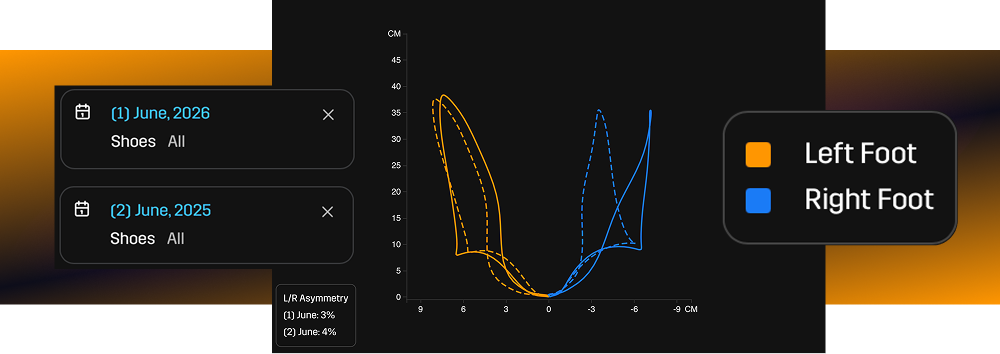
Compared to Grandma's 2025, Dakotah arrived at the starting line with improved overall loading (12% less ILR) and loading symmetry (ILR balance is basically even now, previously at least a 6% difference between sides), allowing her to maintain efficiency while managing fatigue across the full marathon distance.
That correlates with less tilt and more balance in her footpath — and over 26.2 miles, that is the difference between a race that holds together and one that gradually unravels.
Three Titles, One Trajectory
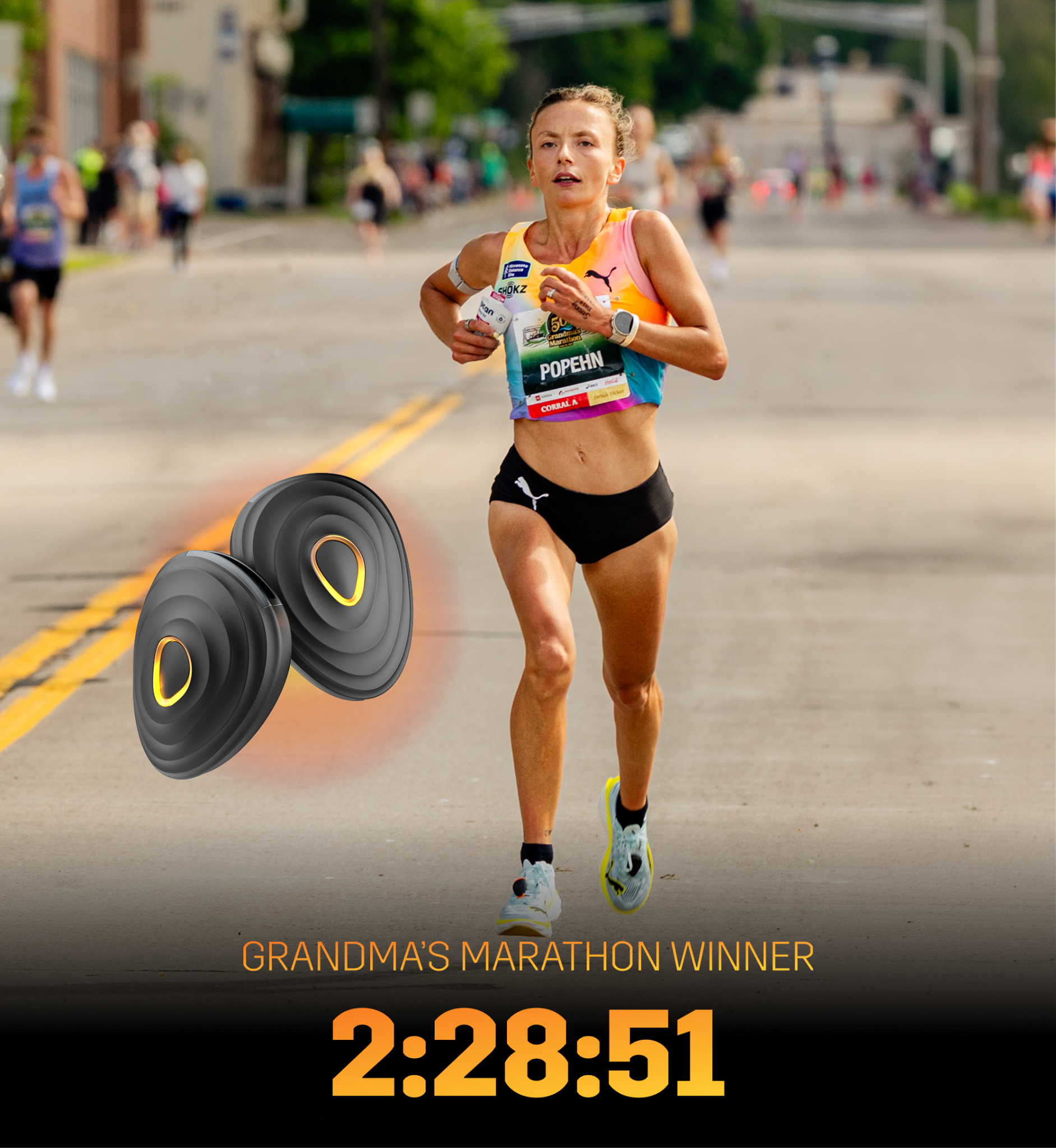
Dakotah's win at Grandma's is her third, and arguably her most complete. The effort was calibrated, the pacing was disciplined, and the mechanics held from start to finish. That is what the data looks like when an athlete is at the top of her game.