
More Than a Comeback: Nicole Lane Clancy’s Personal Best & Eighth-Fastest Run in Eugene Marathon History

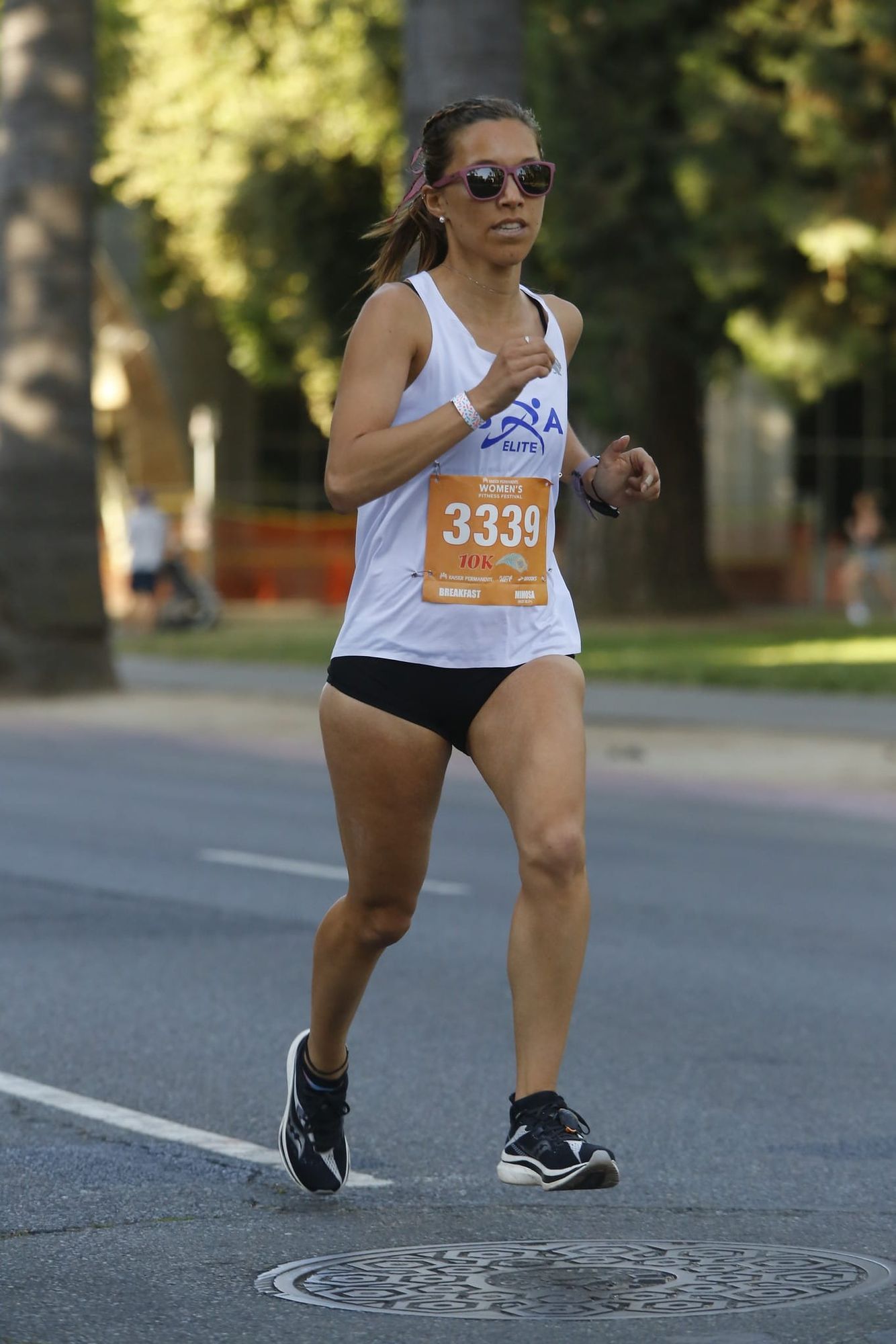
At the 2026 Eugene Marathon, Elite Power Team member Nicole Lane Clancy delivered a performance that stands out not just for the result, but for everything behind it.
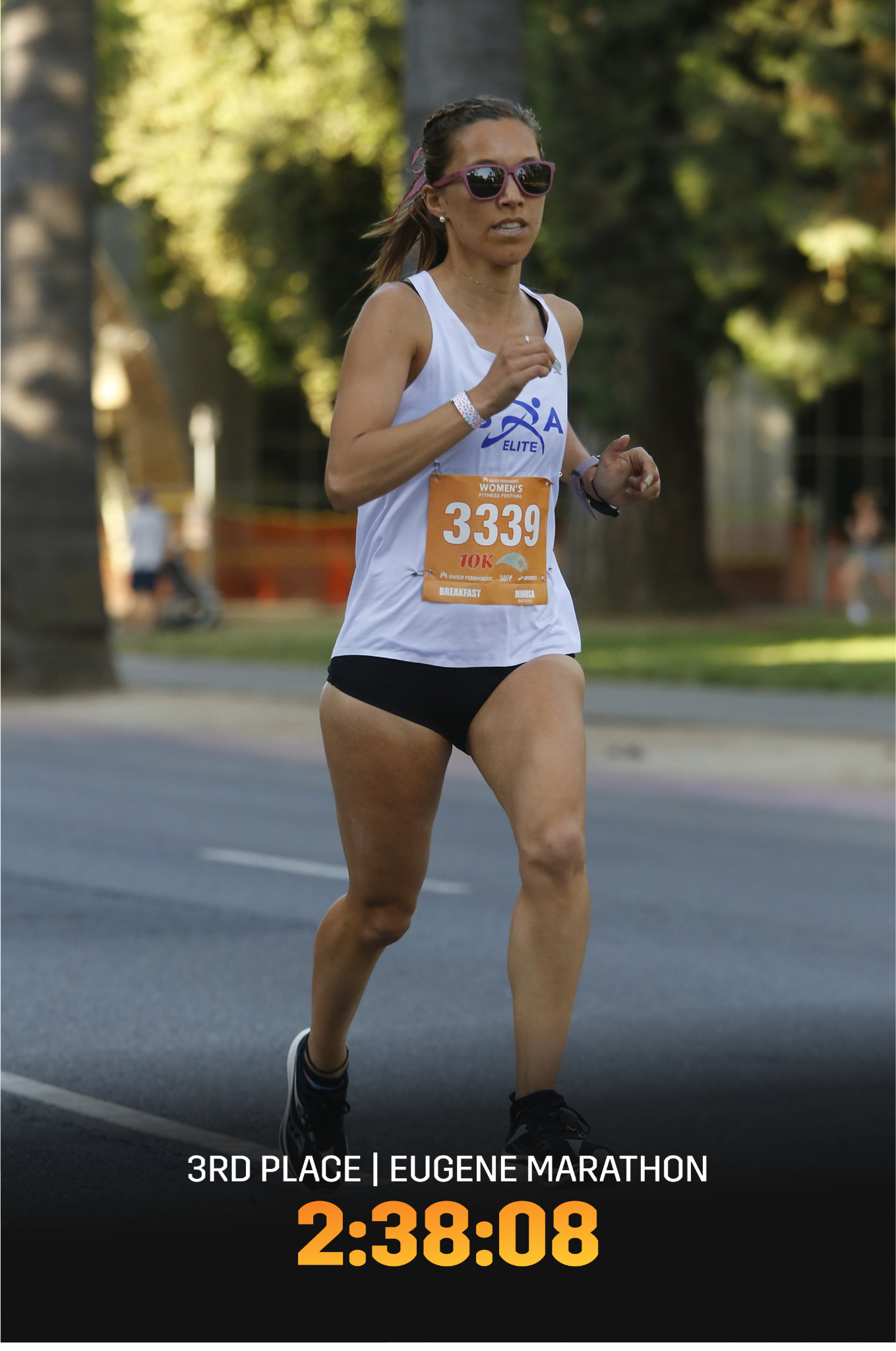
She crossed the line in 2:38:08, taking more than a minute off her previous personal best and finishing third overall. Her time now ranks as the eighth-fastest women’s performance in Eugene Marathon history. It was a breakthrough day shaped by resilience, smart execution, and a carefully measured effort.
This recap features insights from Nicole’s coach, Steve Palladino of the Palladino Power Project, who uses Stryd data to break down how the race unfolded.
The Decision That Started It All
Five weeks before race day, Eugene wasn’t part of the plan.
After a stretch of strong half marathon performances, Nicole made the decision to step up to the marathon distance. That left just over a month to prepare. Enough time to get ready, but far from a traditional build.
It was also her first marathon since 2023. Her first since suffering serious injuries after being struck by a car less than ten months ago. Her first as a new mother.
Getting to the start line meant something. Once the race began, it was clear she was ready to compete.
How She Ran It: Steady, Efficient, and In Control
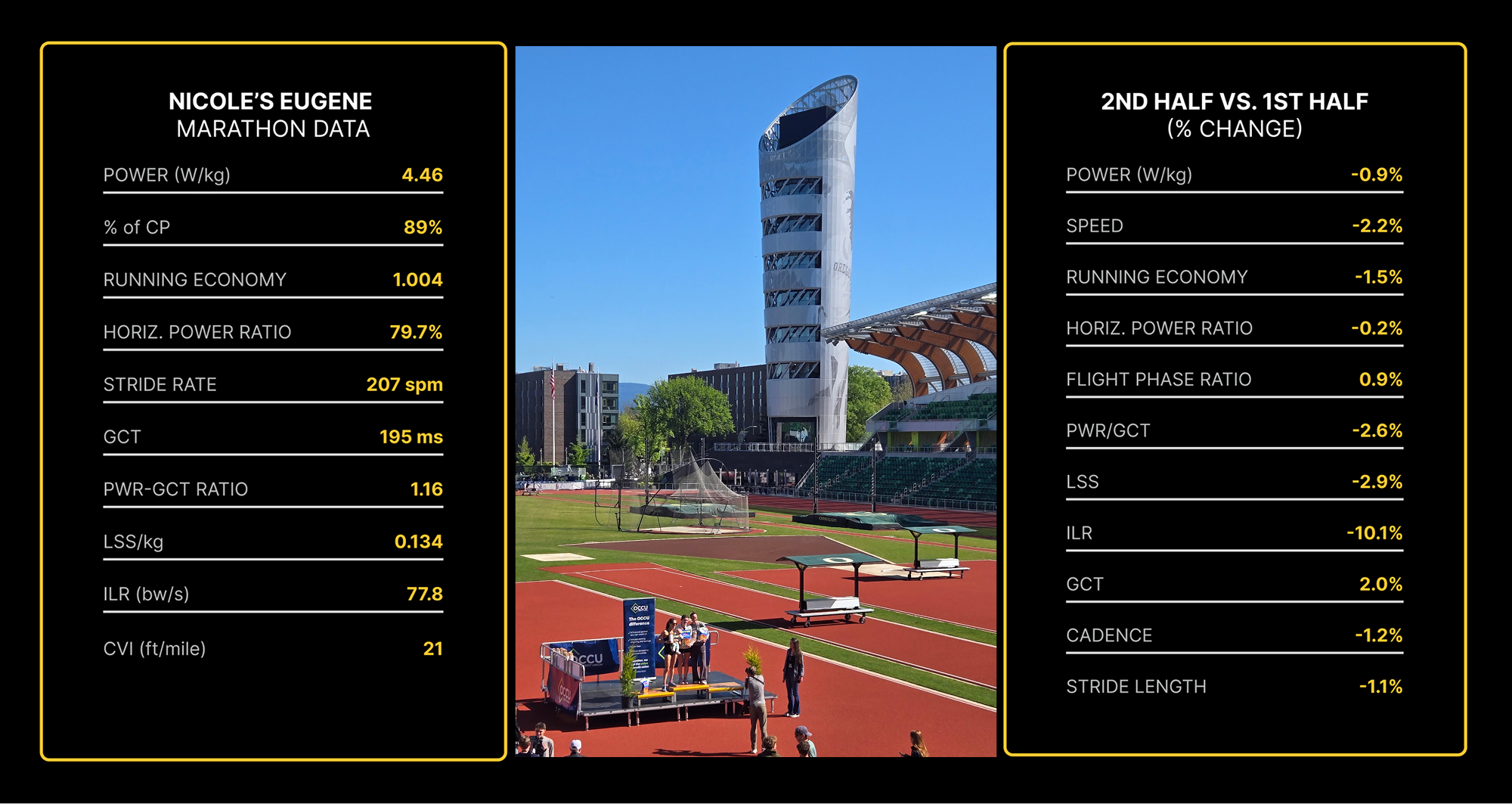
From the opening miles, Nicole’s approach was simple: stay patient, run smart, and avoid going out too hard and the data backs it up.
She settled into an effort right around 89 percent of her Critical Power and held it steady. That early discipline set the tone. Many runners push too hard in the first half and pay for it later. Nicole didn’t.
Her form reinforced that control. She ran with a quick, efficient cadence and minimal ground contact time, staying light on her feet and moving fluidly. Over the course of a marathon, that efficiency adds up.
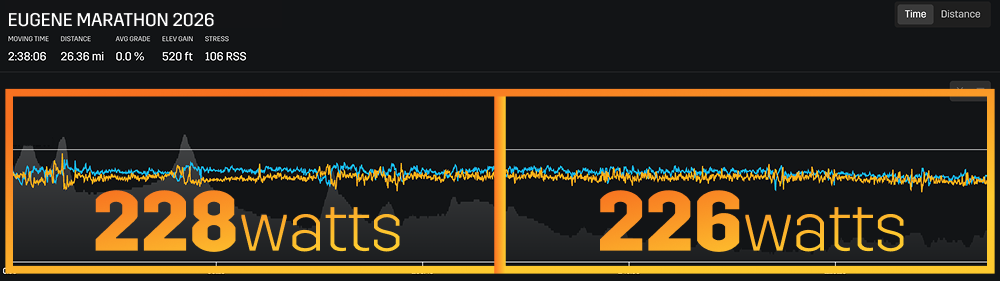
The second half told the real story. Power remained remarkably steady (228 watts in the first half and 226 watts in the second half), dropping by less than one percent. It’s a small detail, but a meaningful one. It reflects a race that was paced with intention from the start.
From a power-based training perspective, this is what a well-executed marathon looks like: minimal fade, stable mechanics, and consistent effort from beginning to end.
Conclusion: More Than a Breakthrough
What makes this performance so impressive is the context.
Given the shortened build, her return from injury, and a year full of life changes, this race feels less like a peak and more like a starting point. With a full training cycle ahead, 2:37 looks not just possible—but well within reach.
She finished just over a minute shy of the U.S. Olympic Trials standard, but that only tells part of the story. Follow Nicole’s journey on Instagram to see how it unfolds.