
Clayton Young Runs 2:05:41 in Boston, Smashing His PR by Over a Minute and Delivering One of the Fastest U.S. Performances Ever

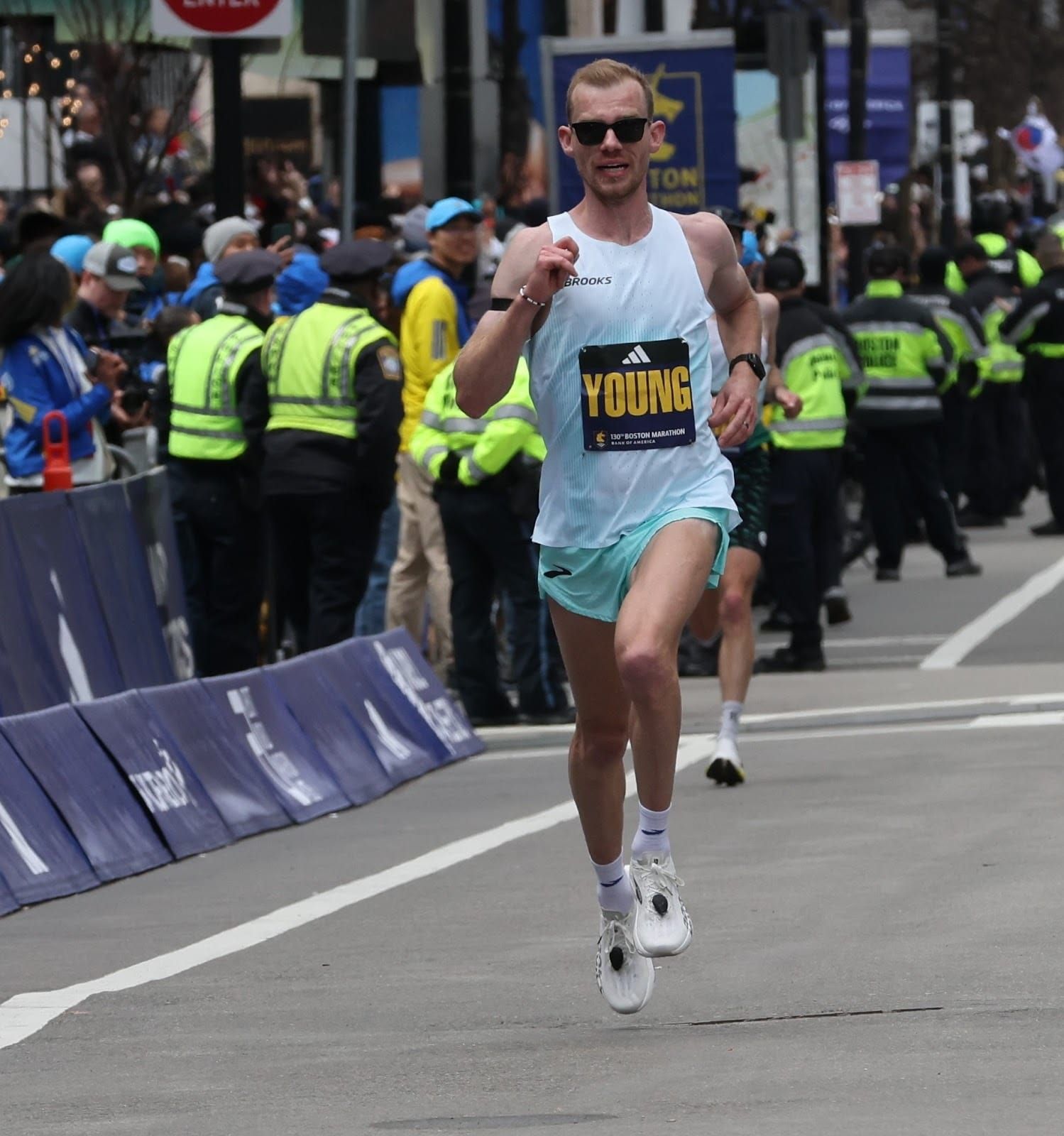
Clayton Young’s 11th place finish at the 2026 Boston Marathon was more than just a breakthrough result. It was a performance built on precision, discipline, and resilience.
After being sidelined for much of the fall with an ankle injury, Clayton entered Boston with just nine weeks of training. On paper, that kind of buildup rarely leads to a personal best on one of the world’s most demanding courses. But Boston 2026 told a different story. By racing to power and leaning on years of accumulated data, Clayton delivered a 2:05:41, improving his previous best on this course by over a minute.
Let’s dive into the data to see why this race was not just faster, but smarter, more controlled, and more informed than his previous performance at Boston in 2025.
More Data, Better Predictions: Stryd's Prediction Helped Set Expectations
One of the most compelling parts of Clayton's 2026 Boston story isn't just the result. It's how precisely it was predicted to help Clayton set expectations for the race.
With 22 months of data in the Stryd ecosystem and a Boston race result from 2025 to act as a baseline, Stryd had a wealth of data to make a prediction on. Based on Clayton’s performances in training from the shortened build, a 1–2% lower power target relative to Clayton’s 2025 Boston performance would put him in a strong position to compete near the Top 10 while staying within his capabilities.
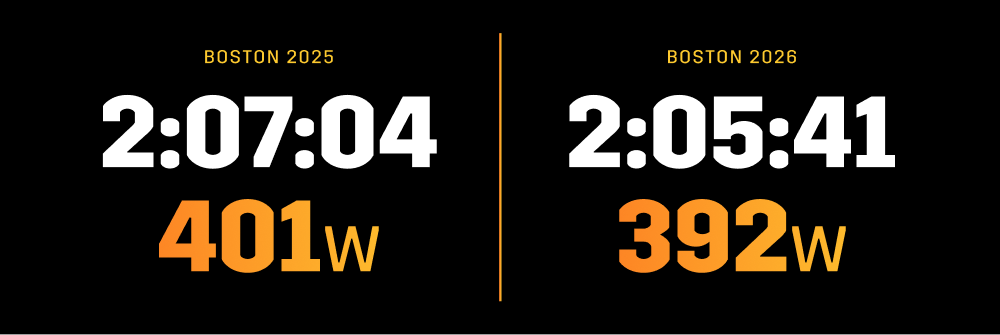
That is exactly what happened. Clayton ran approximately 2.2% lower power than his Boston 2025, landing him at his second-highest power-based performance across all marathons, about 0.75% above his 2024 NYC effort.
That alignment between prediction and performance isn’t luck. It is the result of a dataset that sharpens every time Clayton steps on the start line. Each race adds a data point, and the result is a feedback loop that delivers race-day insights he can actually use to prepare for performance, not just analyze after the fact.
Better Conditions, Faster Time: Trust the Power Number
The 2026 Boston conditions were among the best the race has ever seen. A tailwind, mid-40s temperatures, and no rain. These factors translate directly into faster finish times without requiring athletes to push harder. That’s a critical distinction.
Clayton ran faster than he did in 2025. His power output was actually lower than last year’s Boston, but the favorable environment allowed that effort to convert into a quicker time. This is exactly why athletes race to a power target, not pace.
If Clayton had chased a pace target, he might have underperformed relative to his capabilities. Instead, he held his line, and the conditions did the rest.
For athletes learning to use power in racing, Clayton’s 2026 Boston is a textbook example. The power number tells you how hard your body is working. The finish time reflects what the environment gave you. When conditions are fast, trust the number and let the clock take care of itself.
Masterclass Pacing at Boston
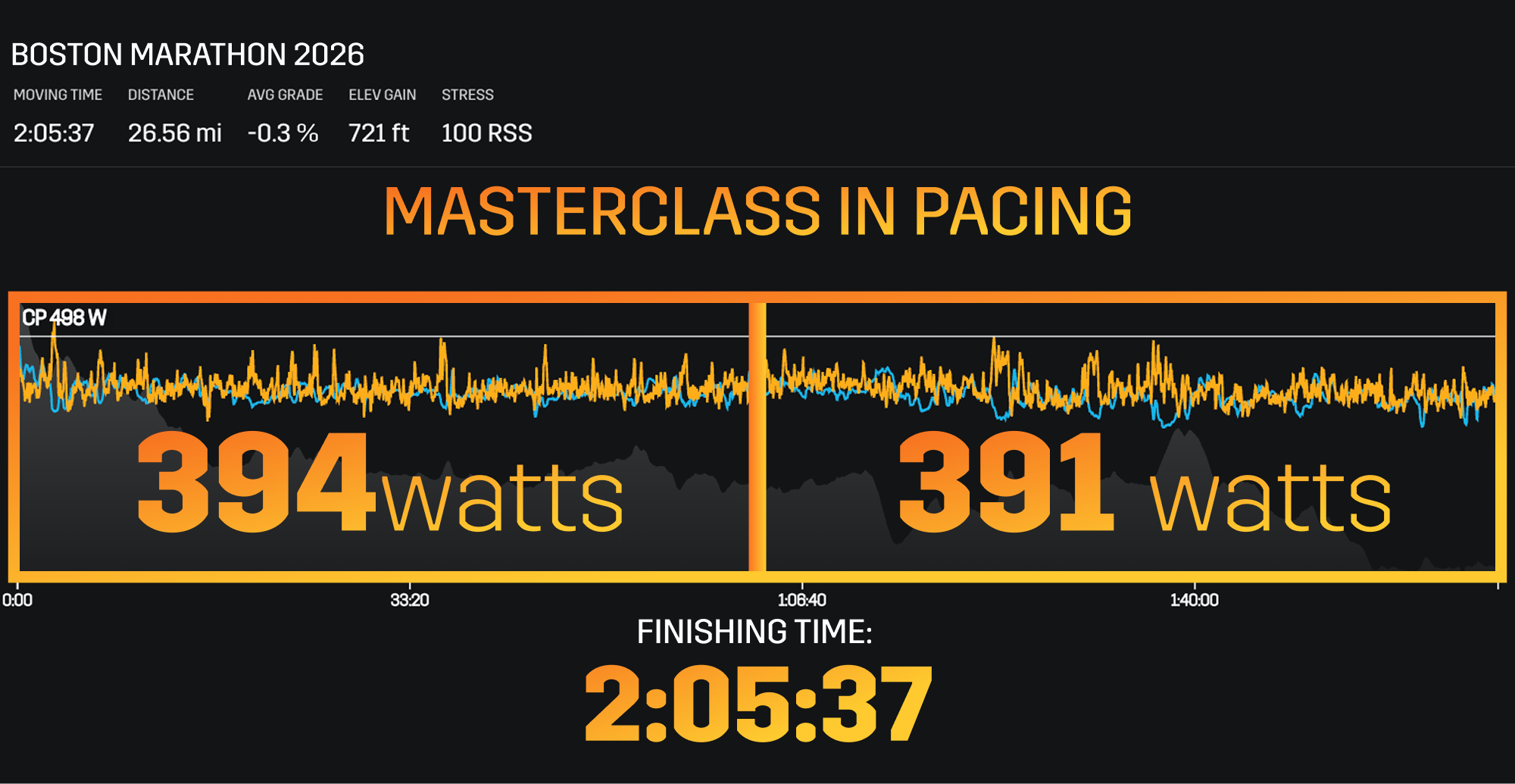
Ask any elite marathoner and they will tell you the second half of Boston is where races are won or lost. Clayton’s data shows a runner who truly understands this course, and in 2026 that experience translated into his most disciplined race yet.
The power split between his first and second half was under 1%, just a 3 watt difference across the entire race. Compare that to Boston 2025, where the separation was meaningfully larger (403 watts in the first half and 398 watts in the second half), and the progression is clear.
Through the first three quarters of the course, Clayton stayed within 1% of his target power, maintaining remarkable consistency across the early downhills and the Newton hills. Only in the final quarter did his power dip by about 2%, a pattern nearly identical to 2025. That is not a blow-up. That is what a hard marathon looks like at the end. The difference is that everything leading up to it was controlled, measured, and intentional.
Balance Insights: The Advantages of Stryd Duo
Clayton came into this race with just nine weeks of training after an injury in the fall, which is important context for his Stryd data.
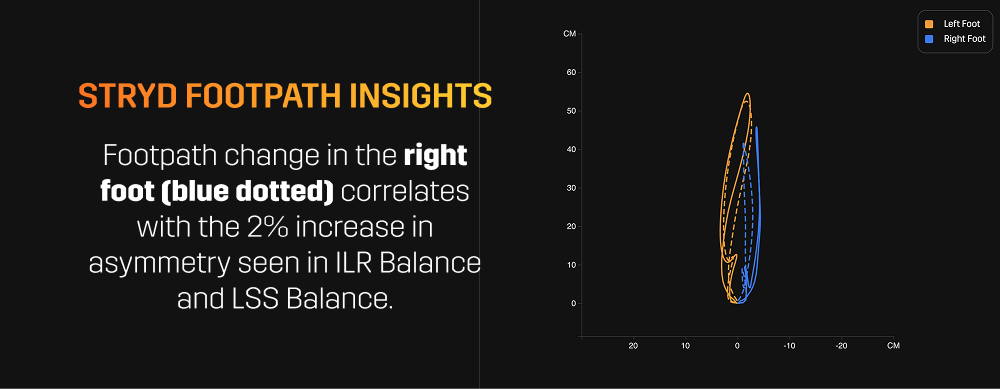
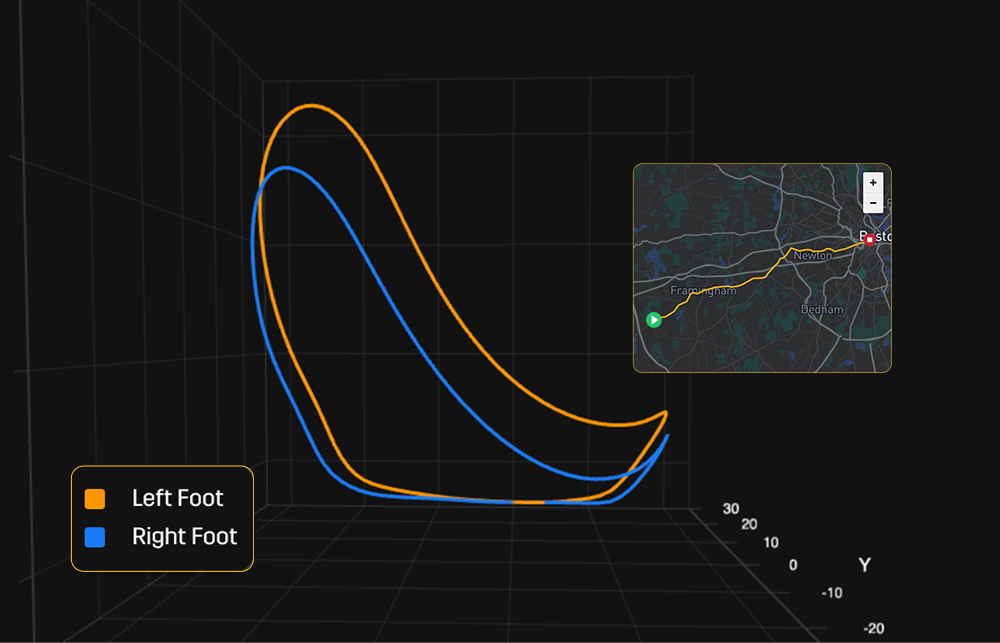
The clearest signal was at his left ankle. While Clayton's race-day footpath continued to show his typical asymmetry, with slightly more load carried on the left side, there was meaningful progress year-over-year. His ILR Balance asymmetry improved by 2% compared to Boston 2025, even after the left ankle injury in the fall of 2025. That points to a continued positive trajectory in how he has been managing and loading through that side.
What stands out is how that imbalance changed with fatigue. The drift toward the left side was about 2%, compared to 4% in 2025. Less drift with less training is a positive sign. It shows improved fatigue management, especially late in the race when fatigue typically amplifies these patterns.
The increased stability was further supported by a change in footwear. Laboratory testing conducted with Stryd indicated that Clayton's new shoe sponsor, Brooks, provided superior biomechanics and stability for Clayton's stride. These laboratory findings were successfully demonstrated during the race.
These insights point directly to the next step, helping guide how he can refine training, manage load, and continue reducing asymmetry in future cycles.
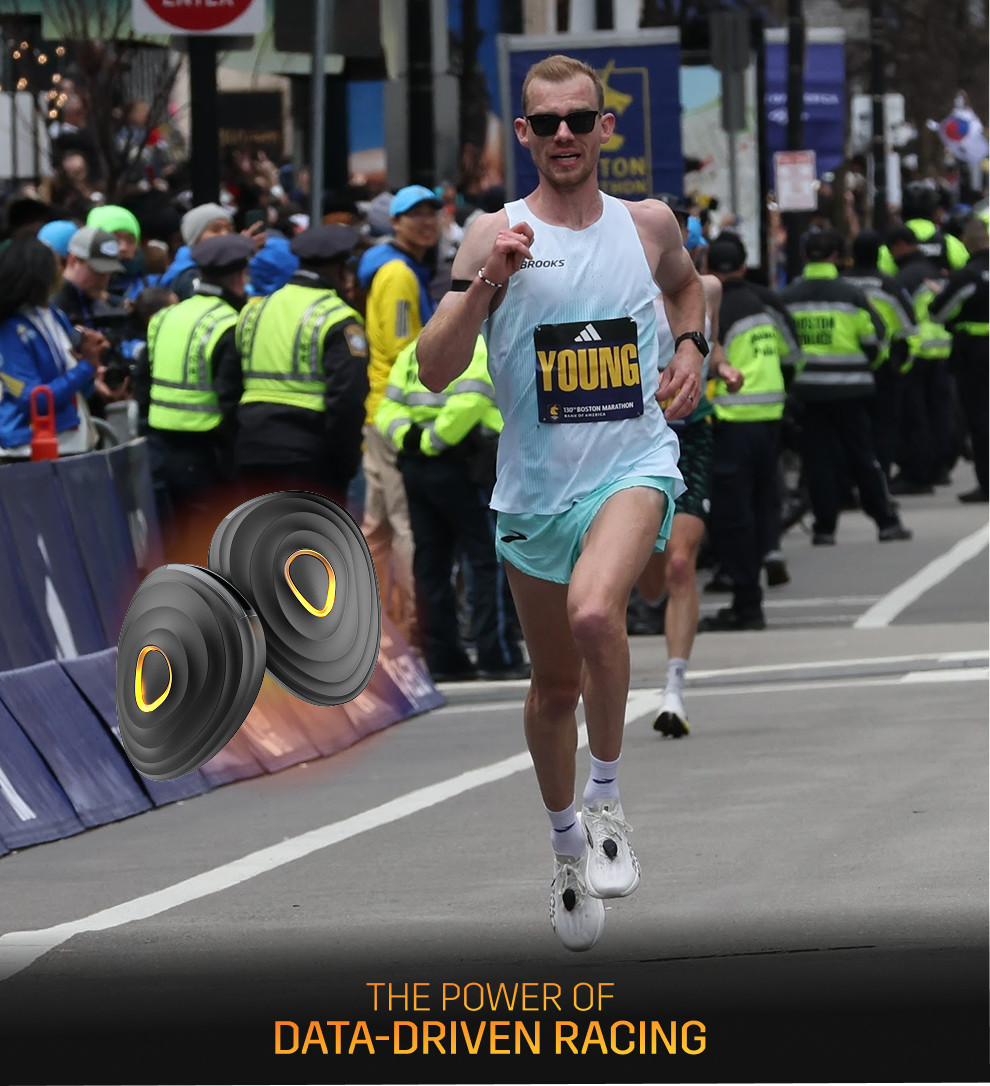
The Power of Data-Driven Racing
Clayton’s 2026 Boston Marathon performance reinforces several key principles that benefit runners at all levels:
1. Long-term data turns insight into action: The alignment between predicted and actual performance highlights the value of building a robust dataset over time. Each race sharpens the next, creating a feedback loop that informs both training and execution.
2. Race to power, not pace: Clayton ran faster without increasing effort. By staying true to his power target, he let favorable conditions translate into a breakthrough time instead of forcing it.
3. Biomechanical insights reveal performance under stress: Stryd Duo data showed how Clayton managed fatigue, with reduced drift compared to previous years. These signals offer a clearer picture of durability and where future gains can be made.
Clayton’s 2026 Boston is a clear example of how preparation, experience, and data come together on race day. Even with a shortened build, he executed at a high level through objective feedback and disciplined pacing.
For runners everywhere, this performance shows how understanding effort through power removes guesswork and leads to smarter racing, especially when conditions change.
As Clayton continues to build, each race adds another layer of insight. The trajectory is clear, and the next breakthrough is already in motion.