
Ultramarathoner Charlie Lawrence Drops Down to the Marathon, Running 2:14 in His Boston Marathon Debut

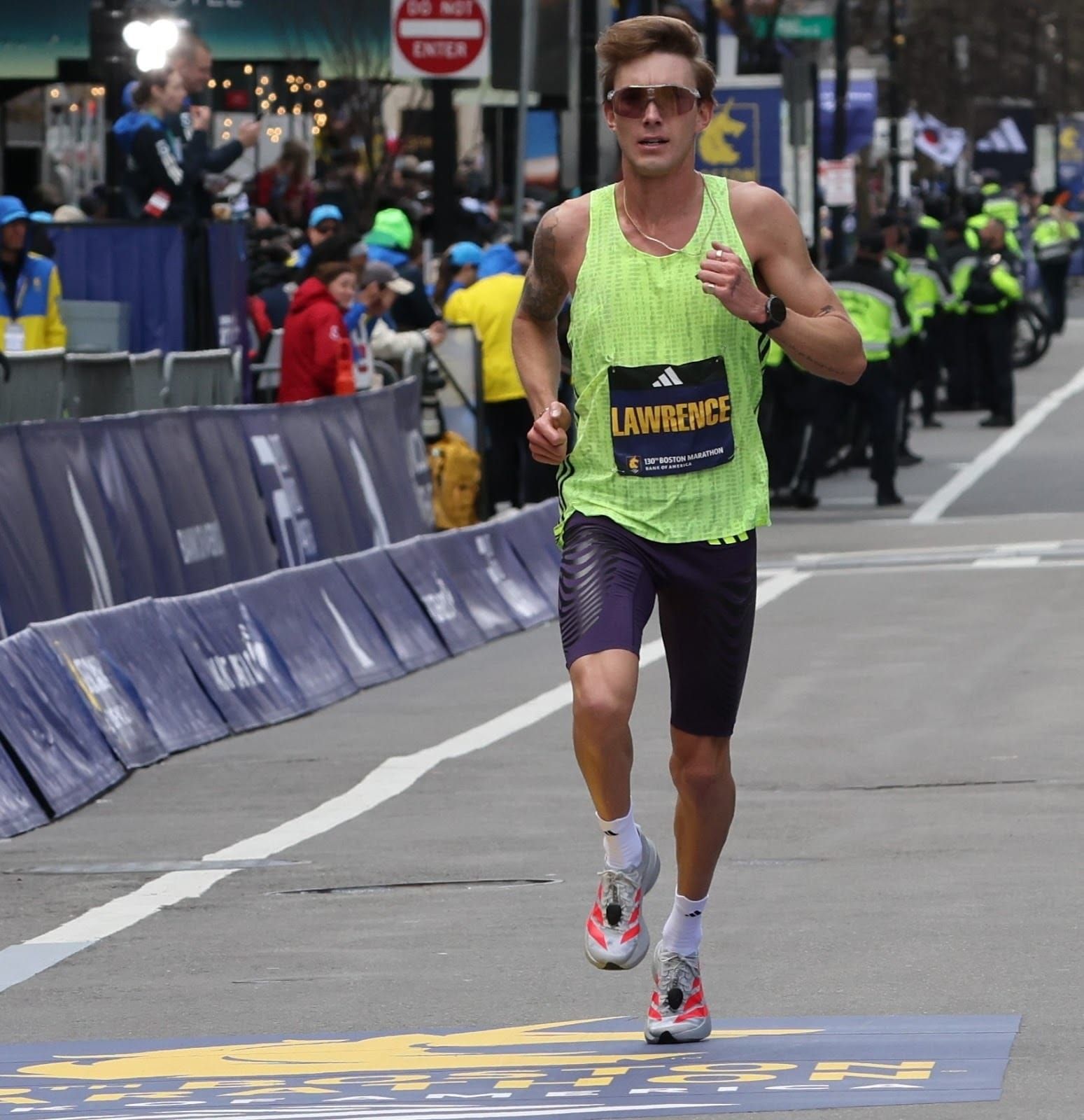
Charlie Lawrence is known for going long distances. As the 100K American record holder, his strength has always been durability over extreme distances. Boston 2026 offered something different. A chance to step down to the marathon and test that engine on one of the sport’s most historic road courses.
The result was a 2:14 Boston Marathon debut, a performance that showed not just fitness, but control. Boston demands patience early, strength late, and the ability to adapt to constant changes in terrain. For a first attempt, Charlie’s race was measured and responsive.
This was not about chasing a perfect split or forcing a time. It was about learning the course, managing effort, and seeing how an ultra engine translates to 26.2 miles.
Let’s dive into the data.
A Smart Boston Marathon Debut
Charlie’s pacing tells the story of a well-executed first run at Boston. He stayed on target early, then gradually increased his effort by 1 to 2% through the middle of the race as it unfolded. In the final quarter of the race, his power dipped by about 2%, a natural response to the demands of the course.
The middle section stands out. Rather than forcing the pace, Charlie settled in and then leaned into the race. It reflects a strong sense of effort and timing, likely shaped by his ultrarunning background.
A slight fade late is part of the Boston experience. For a debut, this level of control is a strong foundation to build on.
What the Data Says About an Ultra Engine
This is where Charlie’s data stands out. His Leg Spring Stiffness, a measure of how well each stride stores and returns energy, remained remarkably stable throughout the race. From start to finish, it dropped by only about 2% on average. That level of consistency over 26.2 miles reflects the durability of an athlete used to going much longer.
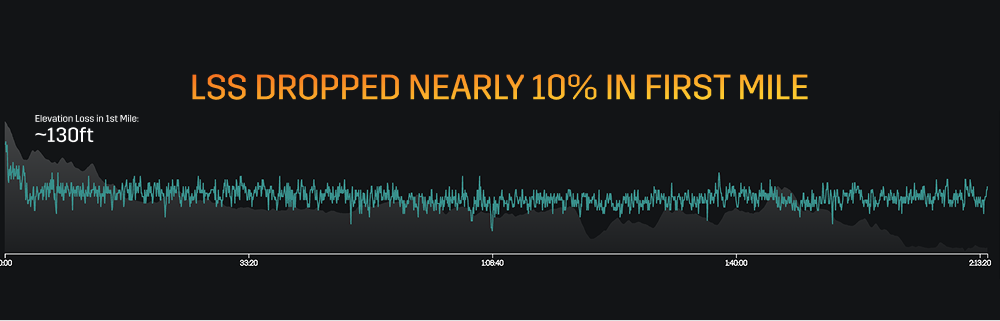
The one exception came in the opening mile, where LSS dropped nearly 10%. Charlie noted that the early downhill felt awkward, and the data supports that. Boston begins with a sustained descent, and for an ultrarunner more accustomed to steady efforts, that eccentric loading can feel unfamiliar. His Impact Loading Rate balance also showed slightly more asymmetry on the downhills, a small signal that his body was working harder to manage those mechanics.
What stands out is how quickly he adjusted. After the early miles, his mechanics stabilized and remained consistent for the rest of the race.

Balance Insights: Stability on a Demanding Course
Boston is not a symmetrical course. The early downhills and constant elevation changes often expose imbalance. This is where Stryd Duo’s balance metrics add important context.
Charlie’s Impact Loading Rate balance remained consistent from start to finish, with no progressive drift as fatigue set in. There was slightly more asymmetry early on the downhills, but it resolved quickly and did not build. That kind of stability is not guaranteed on a course like Boston.
What stands out is not perfect symmetry, but consistency. On a course designed to expose weaknesses, Charlie maintained a stable, repeatable pattern from both sides of his body. That level of control under changing terrain is a strong indicator of durability and coordination at race effort.
Why This Bodes Well for Comrades
Charlie is not building toward another marathon. He is heading to Comrades in June, a roughly 90 km ultramarathon defined by long, sustained climbing. His Boston data offers some encouraging signals for that challenge.
His balance remained stable under load, and his mechanics held steady once he settled into the race. The early downhill asymmetry is less relevant here, as Comrades places greater demands on sustained climbing.
A 2:14 Boston debut, executed with control and consistency, is a strong indicator heading into ultra distance. He came to Boston to test himself in a different arena, and the data shows a system ready for what comes next.
The Power of Data-Driven Racing
Charlie’s Boston Marathon debut reinforces several key principles that benefit runners at all levels:
1. Effort-based pacing builds strong foundations: Charlie stayed controlled early and adjusted as the race unfolded, allowing him to run a steady, well-managed race on a challenging course.
2. Durability shows up in consistency: His stable leg spring stiffness and minimal mechanical drift highlight an engine that maintains efficiency from start to finish.
3. Adapting to the course is part of execution: The early downhill disruption and quick adjustment show how effectively he responded to the demands of the course in real time.
Charlie’s Boston performance is a clear example of how experience from one discipline can translate into another when guided by data and controlled execution.
For runners everywhere, this race highlights how understanding effort and tracking biomechanics can improve decision-making, especially on challenging courses.
As Charlie turns his focus to Comrades, this performance provides a strong signal. The engine is there, the system is stable, and the next challenge is already within reach.