
Closer Look | Improved Critical Power Validation in Adaptive Training

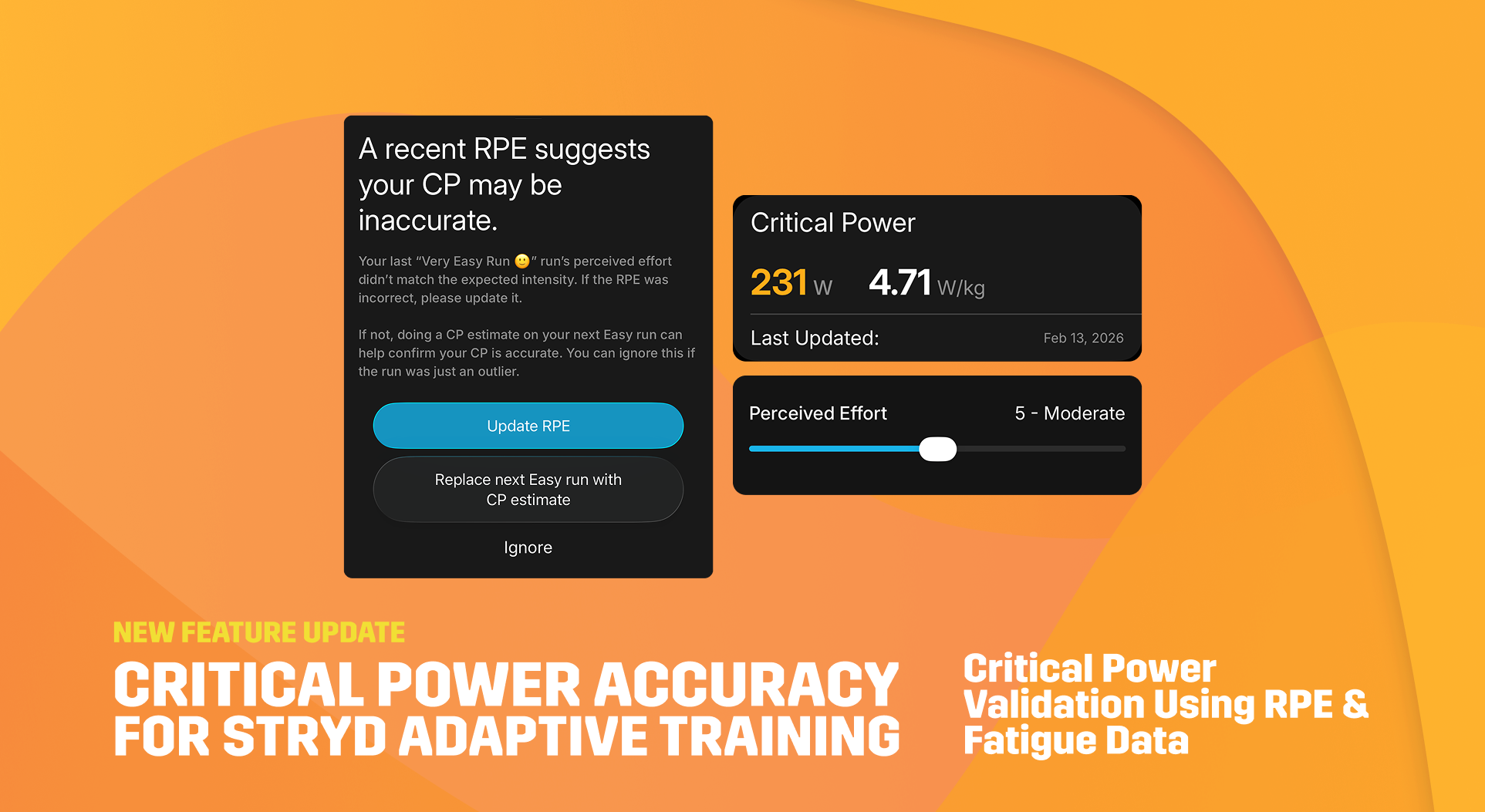
Critical Power is the foundation of your power-based training, shaping everything from training zones and workout targets to race predictions.
With this update, Adaptive Training takes a meaningful step forward by improving how Critical Power is evaluated.
The result? Workouts that stay precise, zones that stay relevant, and a plan that continuously reflects your true fitness.
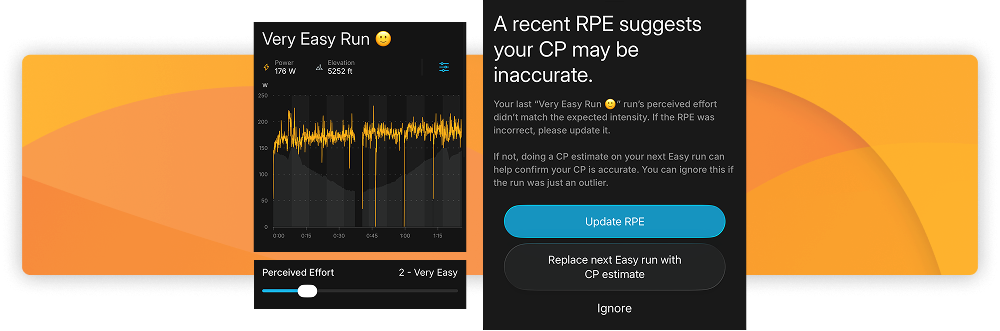
RPE Improves Critical Power Validation
Stryd can now detect when your Critical Power may be inaccurate by comparing your reported Rate of Perceived Effort (RPE) to what your power profile and fatigue patterns suggest that run should feel like.
Fatigue is Stryd’s proprietary metric that quantifies your remaining energy capacity after a run, using insights from your Power Duration Curve (PDC). By combining power data with fatigue modeling, Stryd can better determine whether your reported effort aligns with your physiological output.
Here’s how effort levels typically align with power and fatigue:
- RPE 1–4 (Easy): Low fatigue and minimal time at or above Critical Power
- RPE 5–6 (Steady/Tempo): Moderate challenge with controlled fatigue
- RPE 7–10 (Hard–Max): Meaningful time at or above Critical Power with elevated fatigue
If your reported effort contradicts what either power-based signals or fatigue-based signals indicate, Adaptive Training flags your Critical Power as potentially inaccurate.
A Coach-Like Feedback Loop
This process mirrors how a running coach evaluates athlete feedback.
If a workout is designed to feel “very hard,” but the athlete reports it felt only “moderately difficult,” a coach would question whether the effort zones are calibrated correctly. Adjustments might follow — increasing or decreasing targets to better match true fitness.
Adaptive Training now applies that same intelligent feedback loop automatically, combining objective power data with your subjective feedback to keep training aligned.

What This Means for Runners
Improved Critical Power validation delivers three major benefits:
More Precise Workout Targets
Your power zones stay aligned with your actual fitness, reducing the risk of workouts feeling too easy or unnecessarily difficult.
Better Adaptation to Fitness Changes
As your fitness improves or shifts, CP adjustments help your plan stay calibrated, ensuring continued progress without stagnation.
Greater Confidence in Race Guidance
Because race predictions and pacing strategies are built on CP, improved validation means more trustworthy projections and better race execution.
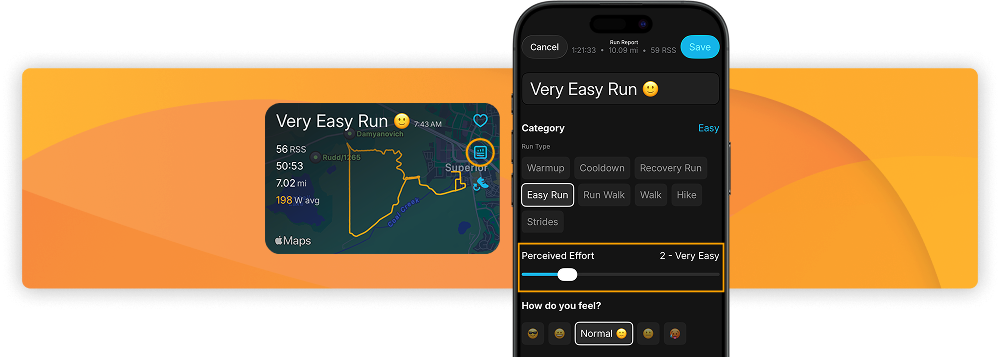
How to Enable CP Validation with Post-Run RPE
To allow Adaptive Training to evaluate and maintain your Critical Power validation, simply include your Rate of Perceived Effort (RPE) in your Post-Run Report.
How to Get Started
- Open the Stryd mobile app
- Select the Calendar icon
- Select the Run Report icon on the activity you want to add RPE to
- Fill out the Post-Run report and be sure to include your RPE
Instructions on Post-Run Reporting and Run Tagging >>
Get Started Today
With improved Critical Power validation, Adaptive Training now refines the foundation of your training, ensuring your zones, workout targets, and race guidance stay aligned with your current fitness.
Improved Critical Power validation is available in the Stryd mobile app for all Stryd Membership subscribers using Adaptive Training.