
Clayton Young Runs 2:05:23 in Chicago, Finishing 7th With the Second-Fastest American Marathon

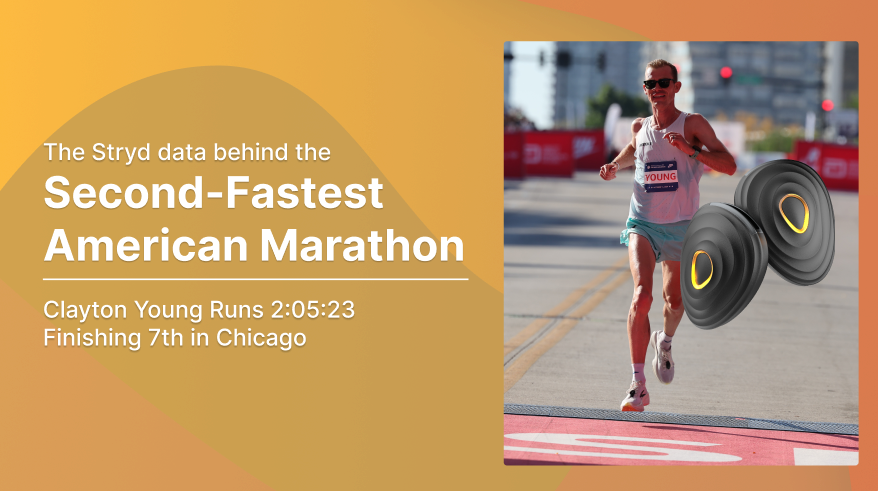
Clayton Young finished seventh at the 2026 Chicago Marathon in 2:05:23, the top American in the field. It is a new personal best, his first official time under 2:06, and the second-fastest marathon ever run by an American on a record-eligible course.
Four weeks earlier, whether he would race or not was in doubt. An MRI after the Great North Run showed a 12-centimeter tear in his left hamstring.
The Stryd data shows how he got from that MRI to a personal best: training that bounced back quickly, an effort that matched his best races of the year, remarkably even pacing, and one decisive move with three miles to go.
Let's dive into the data.
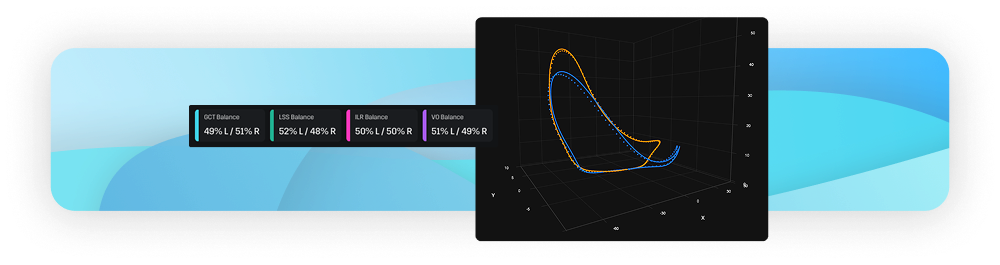
Looking at the Hamstring After the Great North Run, with Stryd’s Balance Metrics
A hamstring tear can quietly change how a runner moves.
Stryd measures this balance on every run, showing what share of each stride comes from the left & right leg. 50% is perfectly even.
Clayton’s metrics showed that despite the tear, he could run at a sustainable effort that did not cause undue fatigue.
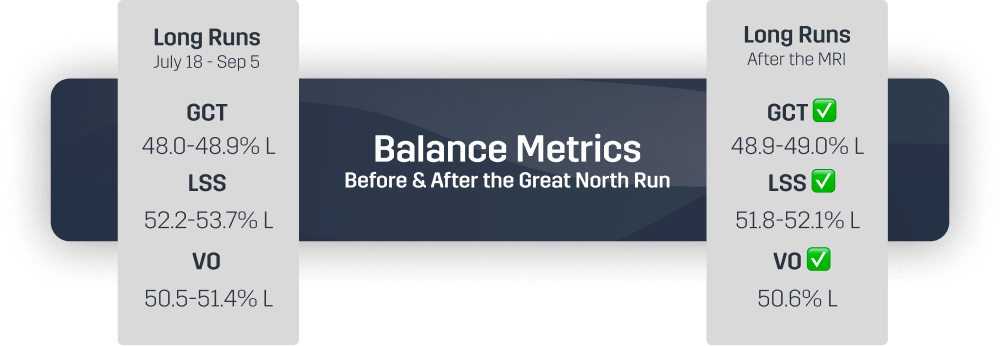
He wasn't easing off to get there, either. His two long runs after the tear came within about 1% of the power of his strongest long run of the summer.

The Same Effort as His Best Races This Year, in Tougher Conditions
In Chicago, Clayton's average power was the same as what he produced at the Great North Run in September and at the Boston Marathon in April.
When controlled for race distance and temperature conditions, Chicago stands above the other two races in terms of performance.
Four weeks after a hamstring tear, Clayton put his best on display in Chicago.
Remarkably Even for 22 Miles
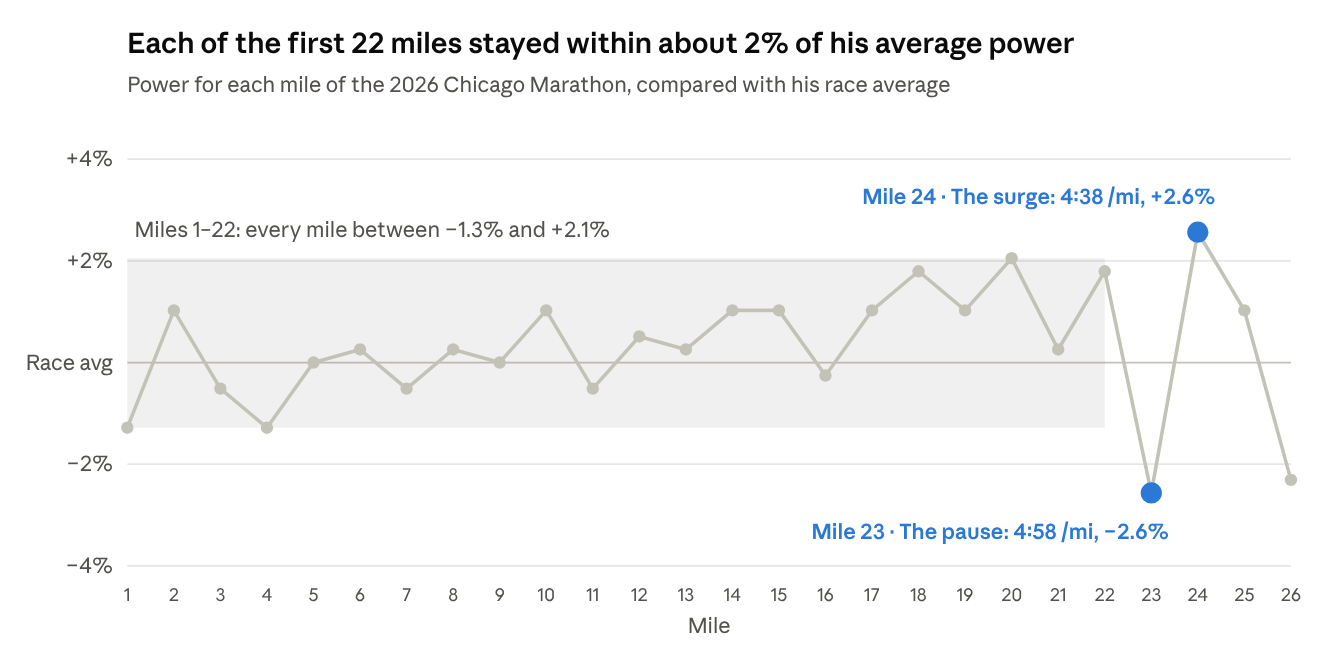
For the first 22 miles, Clayton’s power output for every mile stayed within about 2% of his race-average power.
He went through the halfway point in 1:02:32.
On the clock, his second half was 19 seconds slower. On power, his second half was 0.5% stronger than his first. The effort increased as the race went out, showing he was pacing well & racing tactically.
The Move after Mile 23
Mile 23 eased to the slowest of the race at 4:58 min/mile. His power dipped 2.6% below his race average as the small pack he was running in hesitated coming into the final miles of the races.
At 23.2 miles, Clayton saw a runner ahead coming back to him and decided to go. Clayton surged for roughly a 5 minute duration, broken into three 100 second progressions. The Stryd data shows how his effort progressed.
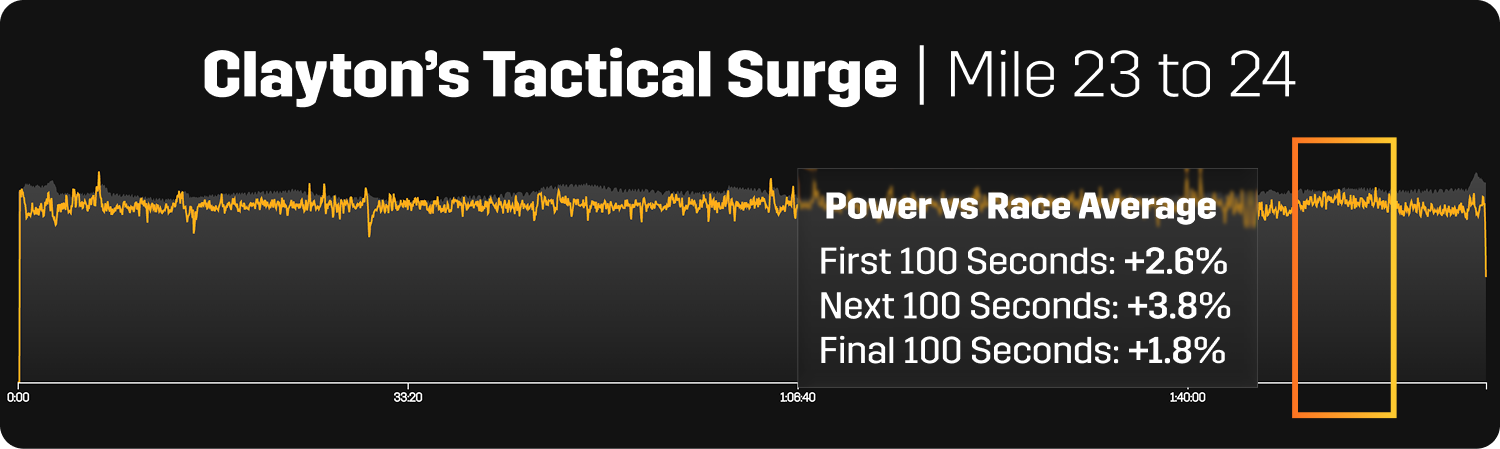
Mile 24 came in at 4:38, with 5% more power than the mile before it. It was his fastest mile since mile 3, and it opened a gap he held to the finish.
He kept pressing all the way in. Even in the final 100 meters, his power rose to 2% above his race average.
The surge from mile 23 to mile 24 is what made Clayton the top American in Chicago.
A Stride That Held Up
Stryd's Leg Spring Stiffness measures how much energy a runner's stride returns with each step. Think of it as how springy the legs stay as fatigue builds. From the first 10 minutes of the race to the last 10 minutes, Clayton kept 98% of it. That matches what he held for one hour at the Great North Run, now held for twice as long.
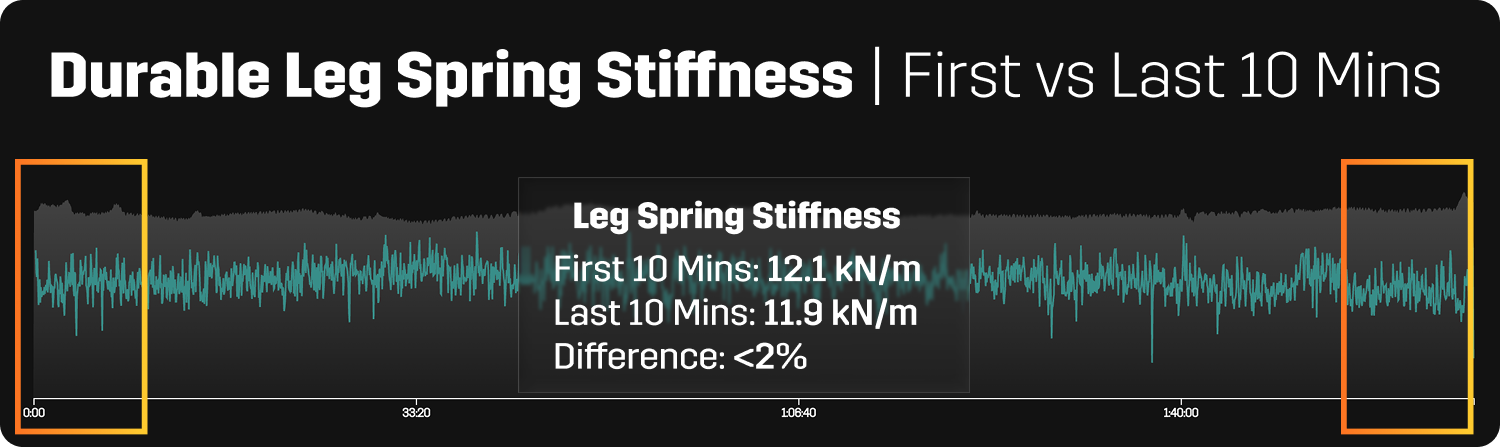
His form also responded to the surge. Compared with the slow 23rd mile, mile 24 had a 4% longer stride length and 5% less time on the ground with each step.
In the final 5K, the balance between his left and right legs moved closer to even, with no sign of favoring the injured side.
On a hamstring that had torn four weeks earlier, Clayton's stride stayed springy and balanced for all 26.2 miles.

What the Stryd Data Shows
Clayton Young's Chicago Marathon highlights three takeaways for runners at every level:
1. Power combined with balance metrics gauge healthy performance. Four weeks after a hamstring tear, Clayton was able to ramp up his power output while ensuring his balance metrics were within normal ranges, giving him confidence to push on.
2. Even effort matters more than even splits. His second half was 19 seconds slower on the clock but 0.5% stronger on power. Judging the race by effort kept him on track to race tactically.
3. Steady running sets up a strong finish. After 22 miles within about 2% of his average, Clayton still had the reserve to surge nearly 4% above it when the race was on the line.
Four weeks after an MRI, Clayton Young ran 2:05:23, finished seventh, logged the second-fastest Marathon among Americans on a record-eligible course, and was the top American in Chicago.